THINKING ABOUT PERMANENT MAKEUP TRAINING OR HAVE YOU ALREADY STARTED?
Before You Spend Thousands on PMU Training, Learn the Fundamentals First
Most PMU programs focus heavily on procedures. This course helps you understand the science, safety, and principles behind them first.
Thinking About PMU Training?
Watch This First
Before you invest in PMU training, take a moment to understand why strong fundamentals matter just as much as hands-on technique.
Starting with the right foundation can make a major difference in how clearly, confidently, and successfully you move forward in permanent makeup.
THE GOOD, THE BAD, AND THE UGLY TRUTH ABOUT PERMANENT MAKEUP TRAINING
Before You Choose Any PMU Training Program — Listen to This
The Good!
Permanent makeup academies can be a great path into the beauty industry.
✅ Hands-on training with real permanent makeup procedures
✅ Exposure to modern permanent makeup tools and techniques
✅ Guidance and mentorship from experienced PMU artists
✅ Opportunities to practice and develop technical skills
✅ A potential pathway into a rewarding beauty industry career
The Bad!
The permanent makeup industry has very limited regulation.
⚠️ Some programs emphasize procedures more than theory
⚠️ Training standards can vary significantly between schools
⚠️ Important fundamentals may receive limited attention
⚠️ Students may graduate without fully understanding pigment behavior
⚠️ Artists may feel uncertain when challenges arise during healing
The Ugly!
Without a strong understanding of fundamentals, problems can occur.
❌ Inconsistent pigment retention after the healing process is complete
❌ Unexpected color shifts that appear during the healing phase
❌ Overworking the skin due to improper depth or technique
❌ Difficulty understanding why healed results look different than expected
❌ Artists needing additional training later to fill important knowledge gaps
The Good!
Permanent makeup academies can be a great path into the beauty industry.
Hands-on training with real procedures
Exposure to modern tools and techniques
Guidance and from experienced PMU artists
Opportunities to build technical skills
A potential pathway to a rewarding beauty career
The Bad!
The permanent makeup industry has very limited regulation.
Some programs emphasize procedures more than theory
Training standards can vary significantly between schools
Important fundamentals may receive limited attention
Students may graduate without fully understanding pigment behavior
Artists may feel uncertain when challenges arise during healing
The Ugly!
Without a strong understanding of fundamentals, problems can occur.
Inconsistent pigment retention after the healing process is complete
Unexpected color shifts that appear during the healing phase
Overworked skin due to improper depth or technique
Difficulty understanding why healed results look different than expected
Artists needing additional training later to fill important knowledge gaps
That’s why the PMU Fundamentals Course was created to help artists build a stronger understanding of the theory, science, and safety principles behind permanent makeup
before moving deeper into procedures.
Because when artists understand the “why” behind the work, they’re better prepared for the “how.”
A COMPLETE LEARNING EXPERIENCE
A Structured Learning Experience Designed to Help You Build
Confidence
Before Hands-On PMU Training.
Inside the PMU Fundamentals Course, you’ll get 20 structured modules, audio narration, high-definition visuals, built-in quizzes, 24/7 course chat support, student worksheets, forms, templates, and a 50-question final exam. Students who pass with a score of 80% or higher receive a certificate of completion.

Permanent Makeup
Fundamentals Online Training Course
Module 1: Introduction to Permanent Makeup
This module introduces you to the foundations of permanent makeup and the core concepts every aspiring PMU artist should understand. You’ll explore the early origins that influenced modern permanent makeup, the evolution of PMU as an industry, and the basics of what permanent makeup is. You’ll also learn what microblading is, how it compares to machine work, and the differences between popular brow techniques such as hybrid shading, powder brows, and ombré brows. This module is designed to give you a strong introductory understanding of the PMU field before moving deeper into the course.
Module 3: Client Forms and Regulations
This module introduces the essential forms, records, and regulatory concepts every PMU artist should understand before working with clients. You’ll review key documents such as the medical questionnaire, informed consent and release agreement, procedure report chart, and aftercare instructions, along with their purpose in supporting safe, professional practice. You’ll also be introduced to HIPAA and learn why client privacy, proper documentation, and record handling are important parts of running a responsible PMU business.
Module 5: Skin Anatomy
This module gives you a foundational understanding of skin anatomy and why it plays such an important role in permanent makeup. You’ll learn how the skin is structured, how blood and lymph function during the healing process, and how natural skin variations can affect PMU outcomes. You’ll also explore the four stages of wound healing, helping you better understand how the skin responds after a procedure and why this knowledge is essential for safe, professional practice.
Module 7: Skin Color, Undertones, & the Fitzpatrick Scale
This module helps you build a stronger understanding of skin pigmentation, undertones, and the Fitzpatrick Scale, all of which are essential in permanent makeup. You’ll learn how melanin affects the skin, how undertones influence color choices, and how the Fitzpatrick Scale is used to better understand different skin types. You’ll also work through a skin type worksheet designed to help reinforce these concepts and strengthen your ability to assess skin more thoughtfully and professionally.
Module 9: Tools, Tips & Techniques
This module introduces you to the essential tools used in permanent makeup, including blades, hand tools, machines, and powered devices. You’ll learn the purpose of different tools, gain a better understanding of blade types and sizes, and explore common mistakes that can affect results. This module is designed to help you build greater familiarity with PMU equipment and develop a stronger foundational understanding of the tools and techniques used throughout the industry.
Module 11: Introduction to Numbing Agents
This module introduces the role of numbing agents and topical anesthetics in permanent makeup, along with the basics of client pain management. You’ll learn about common numbing products, the three most frequently used numbing cream ingredients, and how and when topical anesthetics are typically applied. This module is designed to help you better understand the purpose, timing, and considerations involved in supporting client comfort throughout the procedure.
Module 13: Brow Mapping Techniques
This module introduces the tools, setup, and measuring methods used in brow mapping. You’ll learn about common brow measuring tools, how to set up your mapping station, and practical techniques for creating more accurate, balanced brow designs. This module is designed to help you build a stronger understanding of brow mapping as an important part of thoughtful PMU planning and design.
Module 15: Workstation Set Up & Tear Down
This module focuses on the safety protocols, protective measures, and workstation procedures every PMU artist should understand. You’ll learn safe handwashing practices, personal protective equipment (PPE), facility protection needs, workstation setup, sharps safety, waste disposal, infection prevention, and proper workstation tear down and clean up. This module is designed to help you build a stronger understanding of how to create and maintain a safer, more professional PMU working environment.
Module 17: Setting Up Your New Studio
This module introduces the basic considerations involved in setting up a professional PMU studio. You’ll review equipment inventory needs, general studio setup guidelines, and important factors that help support a clean, functional, and professional workspace. This module is designed to help you better understand the planning and organization that go into creating a studio environment that supports both safety and efficiency.
Module 20: Final Exam
The final exam is designed to help reinforce the foundational knowledge covered throughout this course and assess your overall understanding of the material. The exam consists of 50 questions, and a passing score of 80% or higher is required in order to receive your certificate of completion. Questions are based on the core topics covered throughout the course, including skin anatomy, safety and sanitation, contraindications, pigments, color theory, brow design, client forms, workstation setup, and professional standards. This final assessment is intended to confirm that you have developed a stronger understanding of the essential knowledge every PMU artist should have before moving into hands-on practical training
THE COST OF SKIPPING THE FUNDAMENTALS
A strong foundation doesn’t just improve knowledge, it improves confidence,
decision-making, client communication, and long-term results.
When artists understand the fundamentals first, they’re better prepared to grow their skills with
clarity and confidence.
WHAT CAN HAPPEN WHEN FUNDAMENTALS ARE OVERLOOKED
❌Uncertainty about how different skin types respond to procedures
❌ Performing procedures without a clear understanding of proper needle depth
❌ Difficulty explaining realistic expectations to clients
❌ Difficulty understanding why healed results look different than expected
❌ Artists needing additional training later to fill important knowledge gaps
AND WHEN FUNDAMENTALS ARE UNDERSTOOD
✅ Clear understanding of how skin responds to permanent makeup procedures
✅ Greater confidence when explaining expectations to clients
✅ Ability to recognize and prevent common mistakes during treatments
✅ Stronger decision-making when adjusting technique during procedures
✅ Confidence advancing into more complex permanent makeup services
WHAT CAN HAPPEN WHEN FUNDAMENTALS ARE OVERLOOKED
Uncertainty about how different skin types respond to procedures
Performing procedures without a clear understanding of proper needle depth
Difficulty explaining realistic expectations to clients
Difficulty understanding why healed results look different than expected
Artists needing additional training later to fill important knowledge gaps
AND WHEN FUNDAMENTALS ARE UNDERSTOOD
Clear understanding of how skin responds to permanent makeup procedures
Greater confidence when explaining expectations to clients
Ability to recognize and prevent common mistakes during treatments
Stronger decision-making when adjusting technique during procedures
Confidence advancing into more complex permanent makeup services
LISTEN TO A QUICK OVERVIEW OF EVERYTHING INCLUDED IN THE PMU FUNDAMENTALS BUNDLE
In this short audio explanation, we walk through the courses, resources, and support tools included in this training package so you can better understand how everything works together to support your learning.
Press play to hear the full breakdown
EVERYTHING YOU NEED TO BUILD A STRONG FOUNDATION
More than just fundamentals, this course gives you the training, tools, resources, and built-in support to grow with confidence before, during, and beyond your hands-on PMU training.
PREVIEW THE PMU FUNDAMENTALS MODULES
Explore a sample of the 20 modules designed to build a strong PMU foundation before hands-on training.
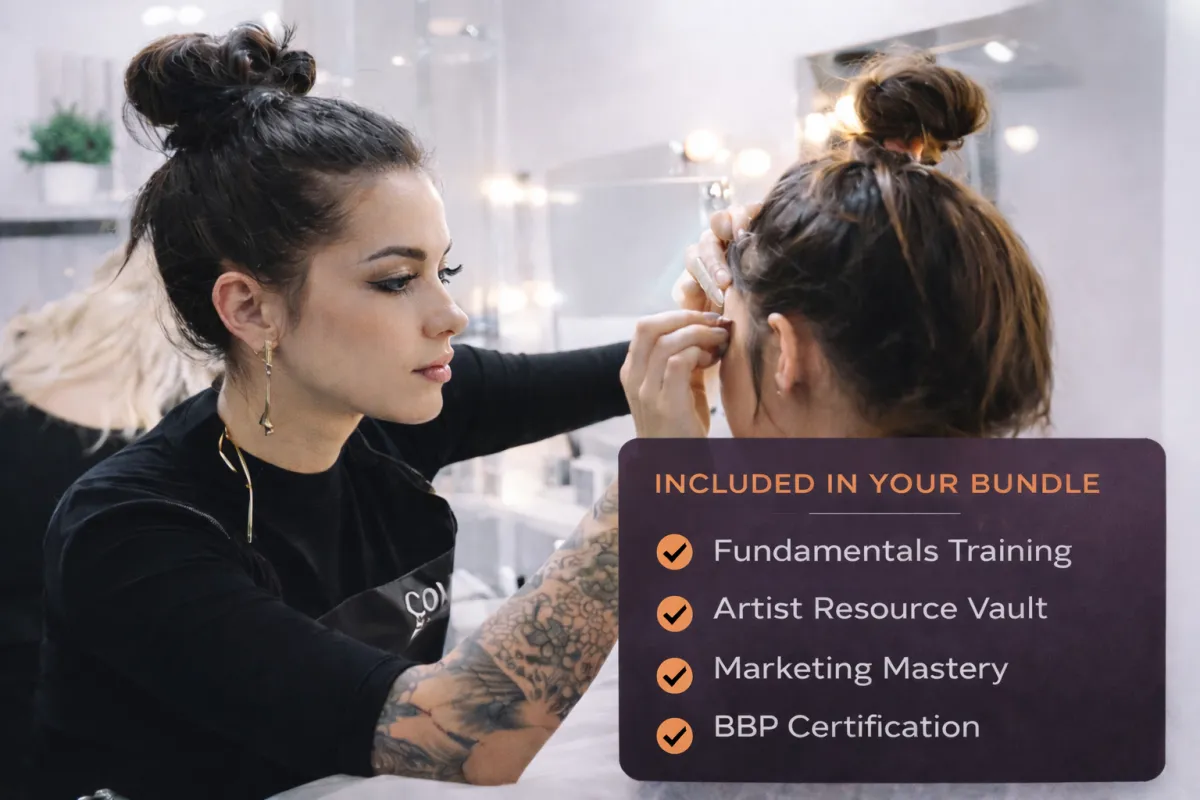
PMU Fundamentals Training
Essential Theory, Principles, and Preparation before moving into hands-on practical training.
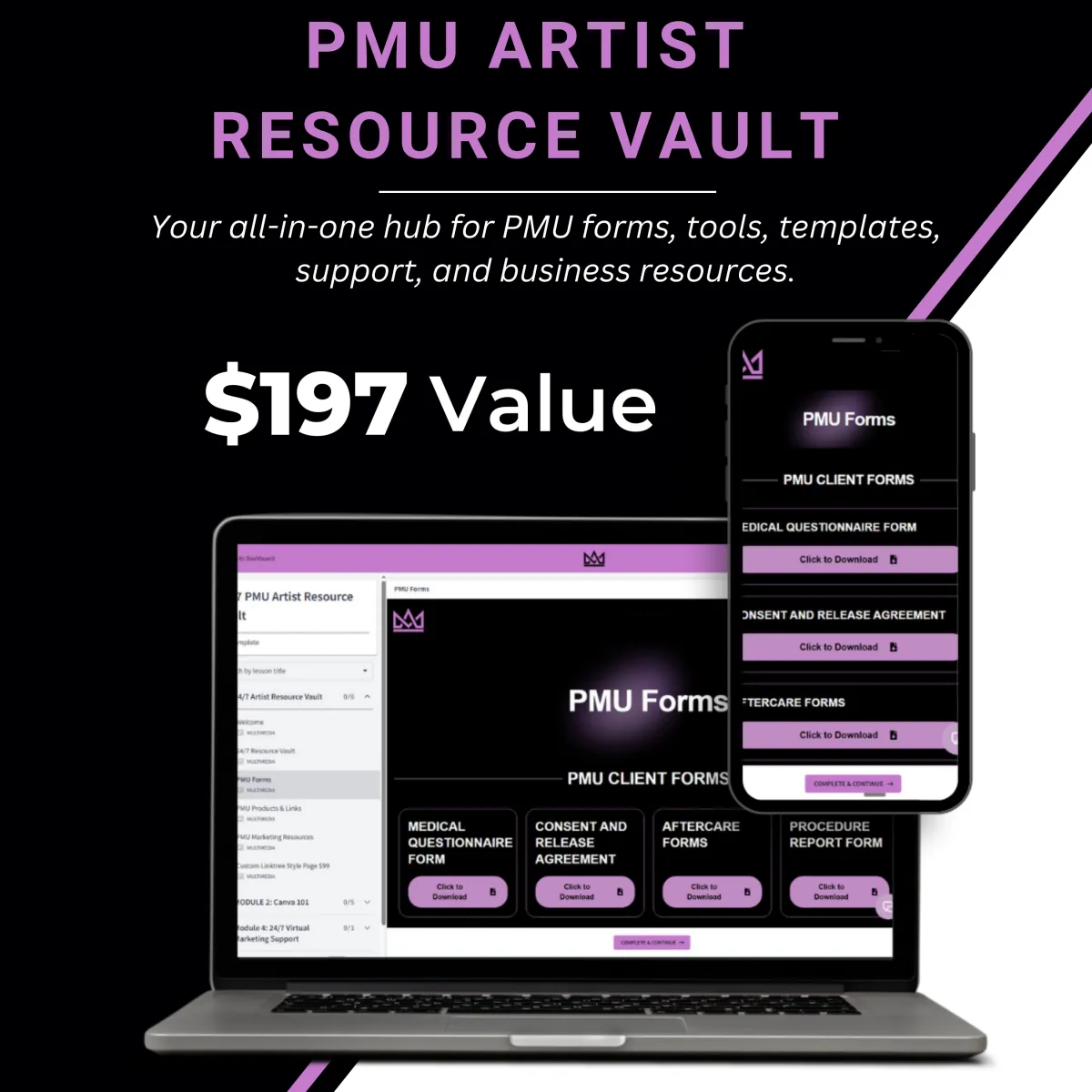
PMU Artist Resource Vault
Forms, Client documents, Canva templates. Discounts, Product links and PMU support tools.
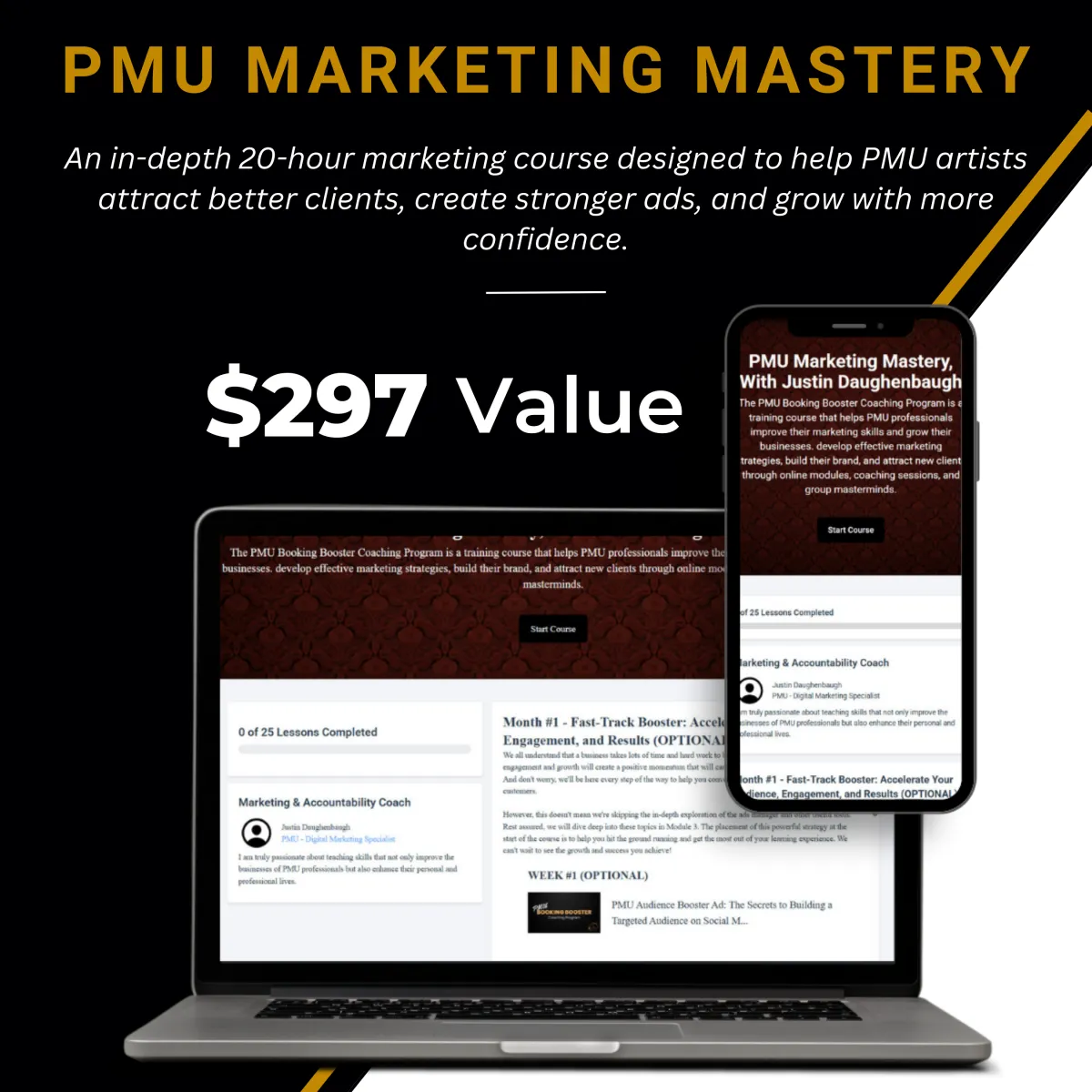
20-Hour Marketing Mastery Course
Client attraction and practical marketing strategies to help you grow your PMU business.
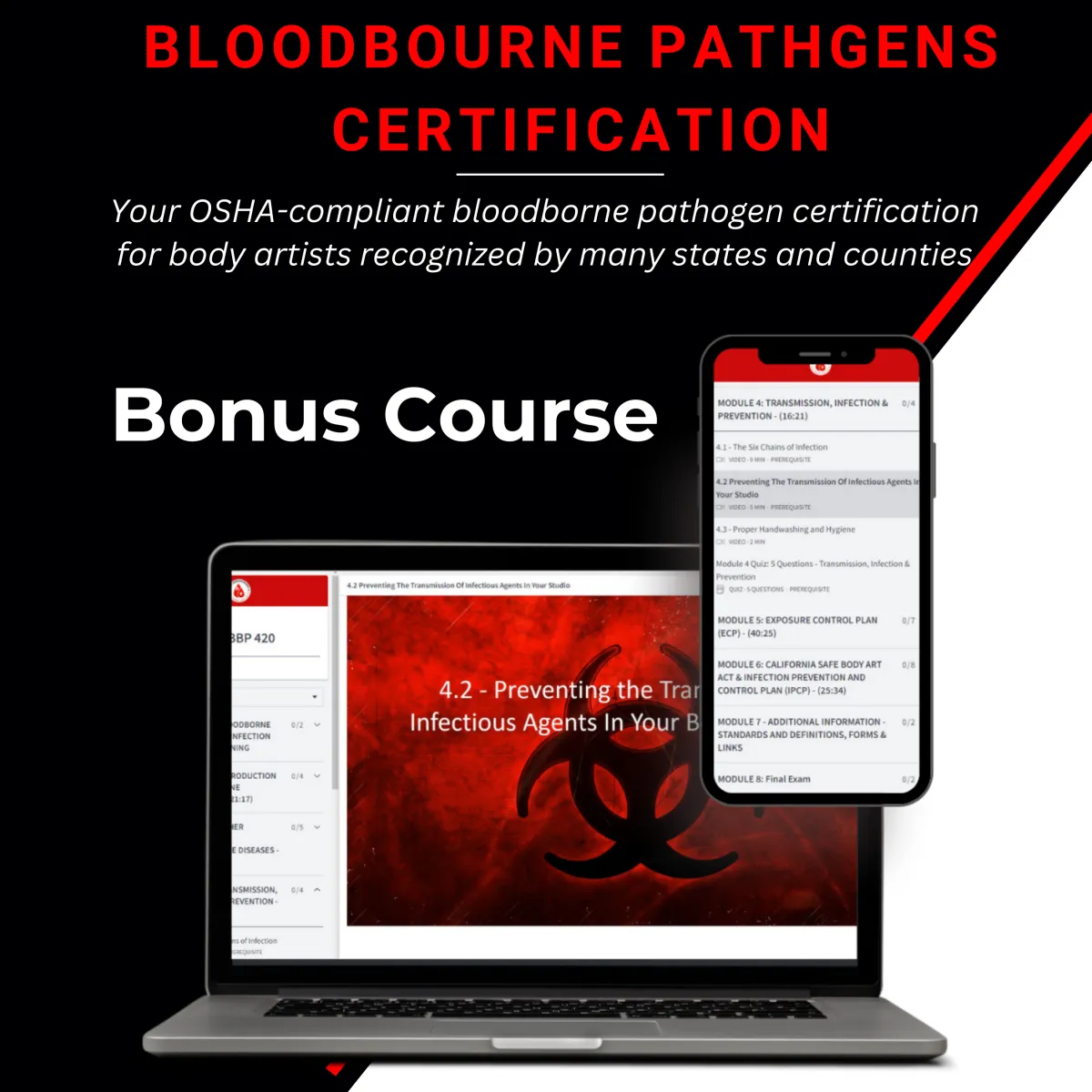
Bloodborne Pathogens Certification
OSHA compliant BBP training covering safety, sanitation, and infection control fundamentals
PMU Fundamentals
Training
Essential Theory, Principles, and Preparation before moving into hands-on practical training.
PMU Artist Resource Vault
Forms, Client documents, Canva templates. Discounts, Product links and PMU support tools.
20-Hour Marketing
Mastery Course
Client attraction and practical marketing strategies to help you grow your PMU business.
Bloodborne Pathogens
Certification
OSHA compliant BBP training covering safety, sanitation, and infection control fundamentals

Build the Knowledge You Need Before Hands-On PMU Training
Permanent makeup is a skill built on knowledge. Before performing real procedures, every artist must understand skin anatomy, pigment behavior, sanitation, healing, and professional safety standards.
This course gives you the critical foundation many trainings skip — so when you move into hands-on practice, you do it with confidence and the right understanding.
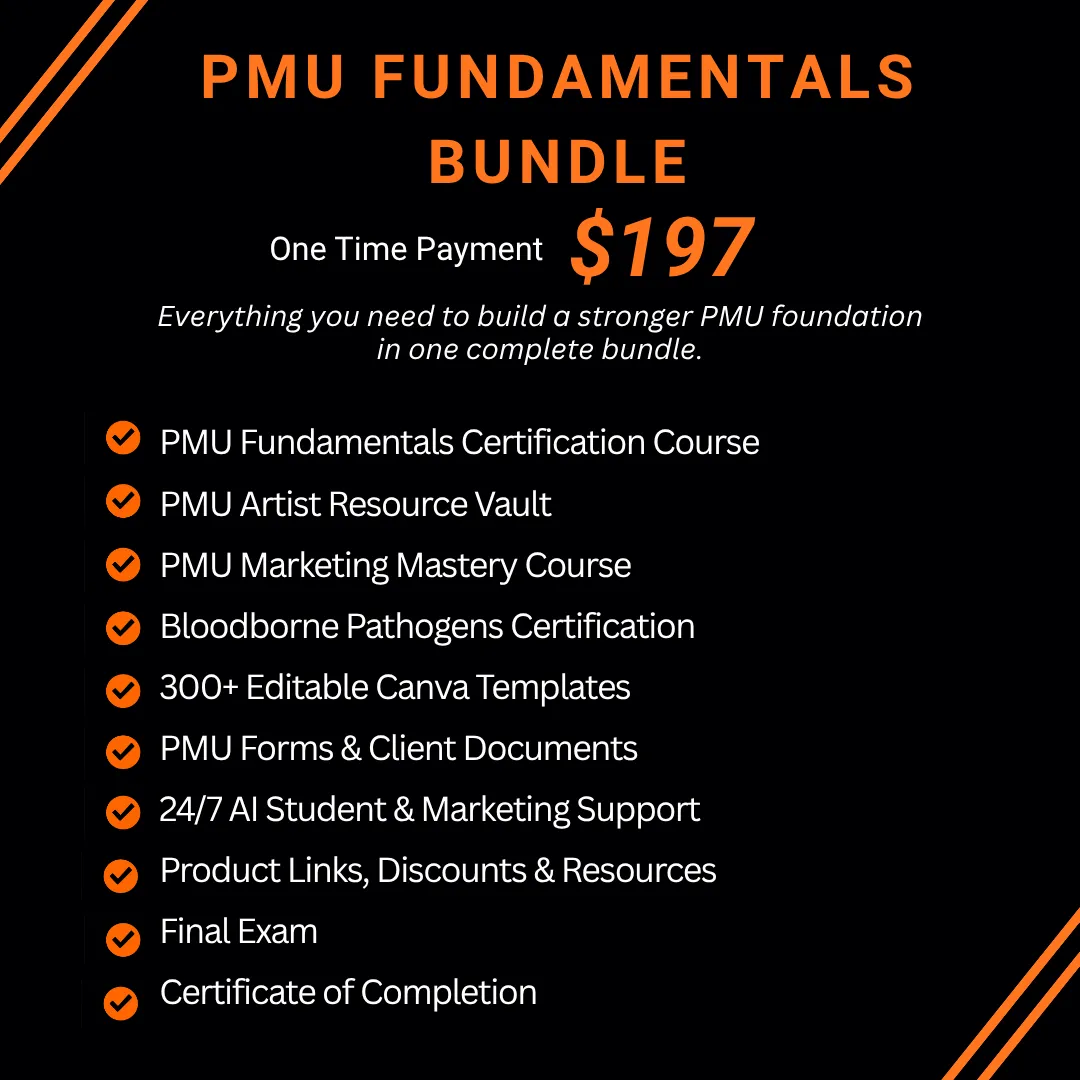
Complete PMU Fundamentals Bundle
Value if purchased separately:
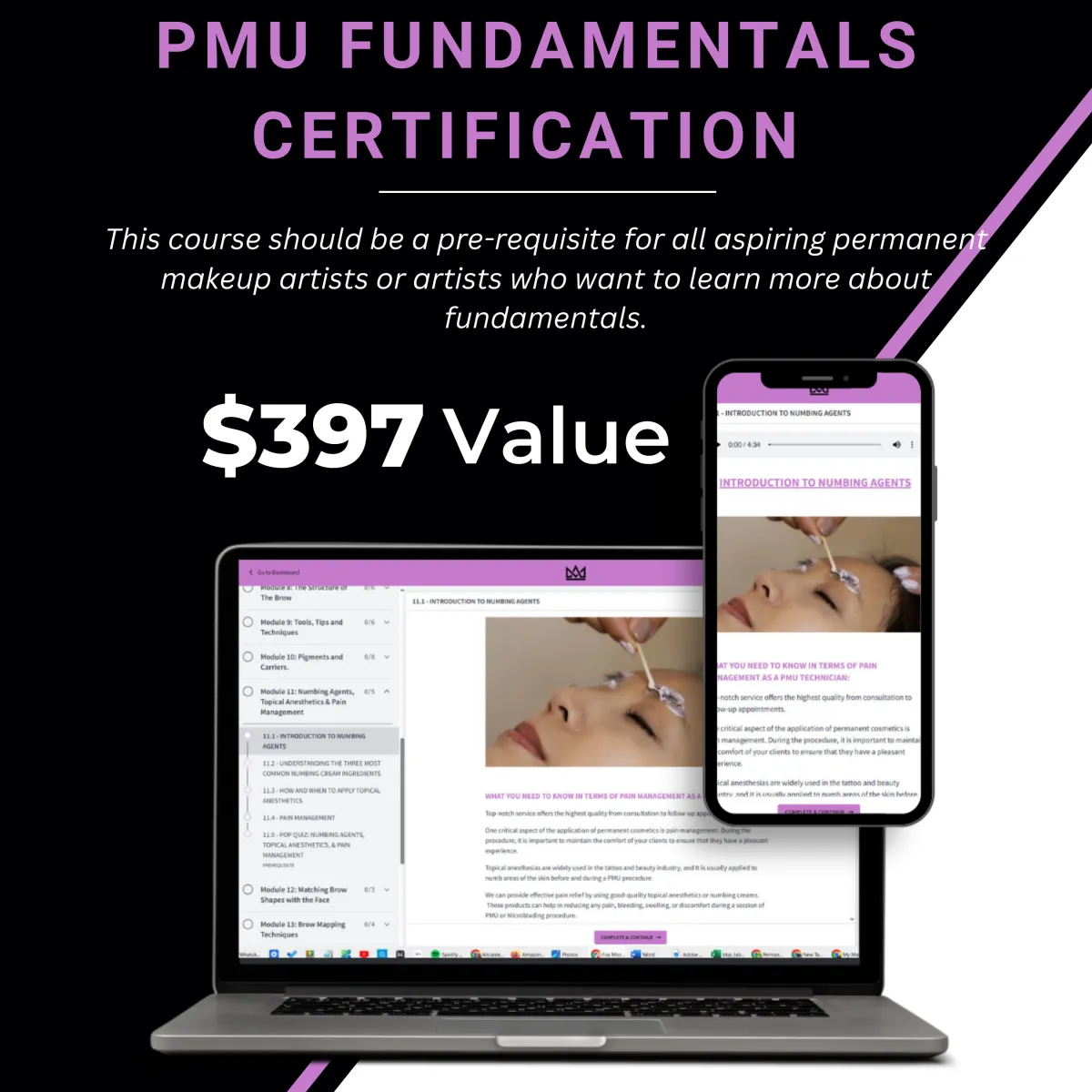
PMU Fundamentals Course — $397
Artist Resource Center — $197
20 HourMarketing Mastery Training — $297
Digital Marketing for PMU Artist — $97
OSHA Compliant BBP Certification — $25
Total value: $1013
THE QUESTIONS MOST FUTURE PMU ARTISTS
DON’T KNOW TO ASK
Choosing a PMU training program is a big decision, and not every student knows what to look for until after they’ve already enrolled. These are some of the questions that can help you look deeper, compare your options more carefully, and make a more informed investment in your education.
IS A 2–3 DAY TRAINING REALLY ENOUGH?
Many PMU trainings are structured as short, intensive workshops where instructors must divide their time between demonstrations, hands-on practice, and basic theory. Because of this limited timeframe, foundational topics such as skin anatomy, pigment behavior, sanitation standards, and healing patterns are often introduced quickly so students can move into practicing procedures.
While short trainings can be helpful for exposure and hands-on experience, many artists later realize that truly understanding the fundamentals requires more time and review. That is exactly why the PMU Fundamentals Course was created to help students strengthen the theory behind the work at their own pace instead of only getting a brief overview in class.
CAN YOU REALLY LEARN MULTIPLE TECHNIQUES IN A FEW DAYS?
It is important to understand the difference between being introduced to a technique and truly becoming comfortable performing it.
Each PMU technique requires control of hand movement, depth, pigment selection, and an understanding of how the skin responds during healing. For beginners, even one technique can take time and repetition to feel natural.
In many trainings, several techniques may be demonstrated so students are aware of them, but developing confidence in multiple techniques usually takes continued learning and practice beyond the classroom. That is why this training package focuses heavily on fundamentals, helping students build clarity before or after hands-on instruction.
WHY DO PERMANENT MAKEUP TRAINING PRICES VARY SO MUCH?
Permanent makeup training programs can differ greatly in price depending on factors such as instructor experience, curriculum depth, class size, and the resources included. When comparing programs, it helps to look beyond the procedure itself and ask what educational topics are covered in addition to the hands-on portion. Things like theory, skin anatomy, pigment behavior, sanitation, healing, consultations, and post-training support can make a big difference in the overall value of a program.
In California, there is also an important regulatory piece students may not realize. A nondegree institution that solely offers educational programs with total charges of $2,500 or less, and where no part of those charges is paid through state or federal student aid, may qualify for an exemption from BPPE oversight. Once a program goes beyond that threshold, the school may need BPPE approval unless another exemption applies. So it is more accurate to say that charging above $2,500 can trigger additional state-approval requirements, rather than saying every program above that amount is automatically unlawful.
That is why students should not look at price alone. They should also look at how much education, structure, and continued support they are actually receiving for their investment. That is one reason this training package is so valuable: the PMU Fundamentals Course helps strengthen the theory many students only touch on briefly in class, while PMU Marketing Mastery and Digital Marketing for PMU Artists help bridge the gap between learning the craft and building a real career.
WHAT HAPPENS AFTER THE TRAINING ENDS?
After completing training, many students begin asking new questions about what comes next. They may wonder how to continue practicing safely, what equipment to purchase, how to structure consultations, or how to begin building a client base.
The transition from learning procedures to actually starting a PMU career can feel overwhelming without continued guidance. That is why this course package includes additional learning resources, practical tools, and business guidance to help artists feel more prepared after training instead of feeling like they were left to figure everything out on their own.
I ALREADY TOOK A $3,000 TRAINING… IS THIS COURSE STILL WORTH TAKING?
Many students who enroll in the PMU Fundamentals Course have already completed hands-on training. In fact, it’s very common for artists to reach out after their class and say they feel like they learned a lot, but still wish they had a deeper understanding of the theory behind the procedures.
Short training programs often have to move quickly so students can see demonstrations and practice techniques. Because of that, foundational topics such as skin anatomy, pigment behavior, healing patterns, sanitation protocols, and consultation strategies may only be covered briefly.
That’s exactly where this course can help.
The PMU Fundamentals Course was designed to strengthen the knowledge that supports the procedures. Many artists use it to revisit the theory behind their training, clarify concepts that may have been rushed during class, and build greater confidence before continuing their practice.
Students also gain access to additional resources included in the package, such as PMU Marketing Mastery, Digital Marketing for PMU Artists, and the PMU Artist Resource Vault, which provide guidance on tools, equipment, marketing, and the business side of becoming a PMU artist.
For many students, this course becomes the piece that helps everything from their training finally start to make more sense.
WHY IS PERMANENT MAKEUP EDU OFFERING SO MUCH VALUE AT SUCH AN AFFORDABLE PRICE?
Our goal was never to compete with hands-on academies, it was to support students before and after they invest in live training.
Permanent makeup training can cost several thousand dollars, and many students quickly realize that the time in class often moves very fast. Important concepts such as machine fundamentals, pigment theory, workstation setup, infection control practices, treatment planning, and business fundamentals are sometimes introduced quickly so students can move into demonstrations and hands-on work.
The PMU Fundamentals Course was designed to give students a place to slow down and really understand these concepts at their own pace. Because it is delivered online, we are able to make this education available to far more students without the overhead costs associated with in-person training environments.
In addition to the fundamentals training, students also gain access to PMU Marketing Mastery, Digital Marketing for PMU Artists, and the PMU Artist Resource Vault, which provide guidance on tools, equipment, marketing strategies, and modern digital resources like Canva and AI tools.
By offering these resources together in one package, our goal is simple:
to help future PMU artists make smarter training decisions, get more value from the programs they choose, and start their careers with greater confidence.
For many students, the course becomes one of the most affordable ways to strengthen their knowledge before or after investing thousands in hands-on training.
WHO IS THIS PMU FUNDAMENTALS COURSE DESIGNED FOR?
This course was created for individuals who want to develop a strong understanding of the science and foundational principles behind permanent makeup procedures.
It is especially valuable for:
• Individuals considering a career in permanent makeup
• Students preparing to enroll in hands-on PMU training
• Artists who want a deeper understanding of skin anatomy, pigments, and healing outcomes
• Working PMU artists who want to strengthen their technical knowledge and confidence
In addition, this course is also used by permanent makeup trainers and academies across the United States as part of their educational curriculum. A complete white-label version of the course is available for instructors who want to provide structured fundamentals education to their students before or alongside hands-on training.
Because of the depth of material covered, many trainers choose to incorporate this course to help ensure their students begin practical training with a stronger educational foundation.
CAN I JUST LEARN PERMANENT MAKEUP ONLINE OR FROM YOUTUBE VIDEOS?
Online education and videos can be extremely helpful for learning the theory and concepts behind permanent makeup. Many artists use online courses, educational resources, and even industry videos to better understand topics like color theory, machine fundamentals, skin structure, consultation strategy, and the business side of the industry.
However, permanent makeup is a hands-on skill that requires proper training, supervision, and practice. Learning how to control depth, pressure, machine movement, and client safety are things that typically require in-person guidance and supervised practice with an experienced trainer.
For that reason, online education is best viewed as something that supports hands-on training, not something that replaces it.
That’s exactly where the PMU Fundamentals Course fits in. It helps students build a stronger understanding of the concepts behind permanent makeup so they can walk into their hands-on training better prepared, ask better questions, and absorb more of what they are being taught.
Many students also use the course after training to review important topics and reinforce what they learned in class.
In other words, online education can be a powerful tool — but it works best when it complements proper hands-on training, rather than trying to replace it.
Understanding these questions is exactly why the PMU Fundamentals Course focuses on the theory, science, and foundational knowledge behind permanent makeup, helping artists enter training more prepared and more confident.
What Artists Are Saying About
The PMU Fundamentals Bundle
Privacy Policy | Terms & Conditions | Refund Policy | Contact Us
SMS Messaging Policy | Education Disclaimer | Earnings Disclaimer
© 2026 Permanent Makeup EDU | All Rights Reserved